Fibroids Vs Ovarian Cysts: Understanding the Difference
 by admin-slG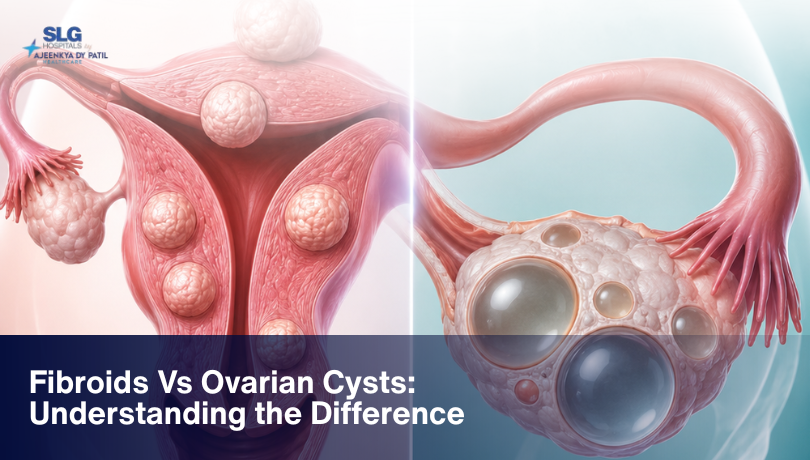
By Team SLG Hospitals by ADYP Healthcare
Have you been experiencing pelvic pain, bloating, heavy periods, or frequent urination and wondering what’s causing it?
Or perhaps a routine scan has revealed that you have a fibroid or an ovarian cyst.
Although both fibroids and ovarian cysts are common and usually non-cancerous, they are different conditions that develop in different parts of the reproductive system and require different treatment approaches.
If you’ve recently been diagnosed or are experiencing persistent symptoms, consulting the best gynecologist in Nizampet can help you understand your condition and choose the most appropriate treatment.
In this blog, we’ll explain the difference between fibroids and ovarian cysts, and what causes them, while also answering some of the commonly asked questions.
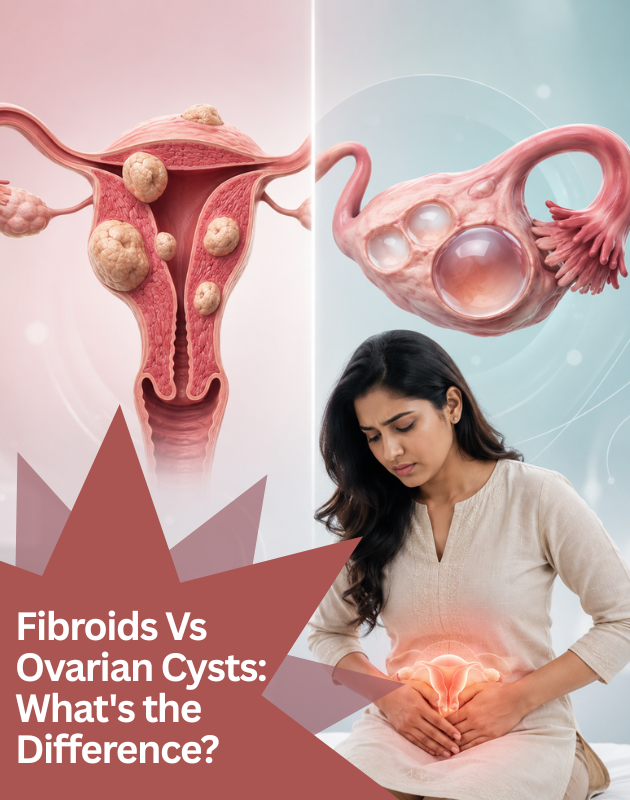
FIBROIDS VS OVARIAN CYSTS: WHAT’S THE DIFFERENCE?
Although fibroids and ovarian cysts can produce similar symptoms, only a medical evaluation and imaging tests can accurately distinguish between the two.
| Fibroids | Ovarian Cysts |
| Develop in or around the uterus | Develop on or inside the ovaries |
| Solid growths made of muscle and fibrous tissue | Fluid-filled sacs |
| Often cause heavy or prolonged periods | More commonly cause pelvic pain or bloating |
| May affect fertility depending on size and location | Most are harmless and often resolve on their own |
| May require treatment if symptomatic | Many only require observation and follow-up |
HOW TO KNOW IF YOU HAVE FIBROIDS OR OVARIAN CYSTS?
Fibroids and ovarian cysts can cause similar symptoms, making it difficult to tell them apart based on symptoms alone. While some women experience no symptoms, others may notice one or more of the following:
Fibroids may cause:
- Heavy or prolonged menstrual bleeding
- Pelvic pain or pressure, sometimes with lower back pain
- Frequent urination
- Difficulty conceiving or pregnancy complications in some cases
Ovarian cysts may cause:
- Pelvic pain, often on one side
- Bloating or feeling full quickly after eating
- Irregular menstrual cycles
In many cases, ovarian cysts form naturally during the menstrual cycle and disappear on their own. However, if a cyst becomes large, ruptures, or twists (ovarian torsion), it can cause sudden, severe pelvic pain and requires immediate medical attention.
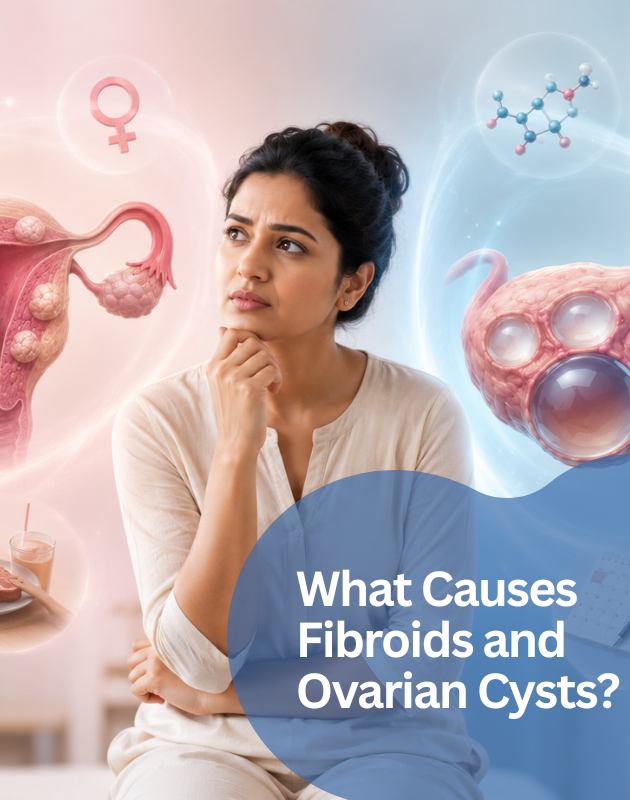
WHAT CAUSES FIBROIDS AND OVARIAN CYSTS?
| Fibroids | Ovarian Cysts |
| Hormonal influences (estrogen and progesterone) | Normal ovulation |
| Family history | Hormonal changes |
| Increasing age during reproductive years | Endometriosis |
| Obesity | Polycystic Ovary Syndrome (PCOS) |
HOW ARE THEY TREATED?
Not all fibroids or ovarian cysts require treatment. Small, symptom-free growths are often monitored, while treatment is recommended if symptoms persist, the growth increases in size, or fertility is affected.
Depending on your condition, treatment may include:
- Medications to relieve symptoms or regulate hormones
- Minimally invasive procedures
- Laparoscopic surgery
- Surgical removal of fibroids or ovarian cysts when necessary
CAN FIBROIDS TURN INTO OVARIAN CYSTS?
No. Fibroids and ovarian cysts are completely different conditions. Although a woman can have both at the same time, one does not turn into the other.
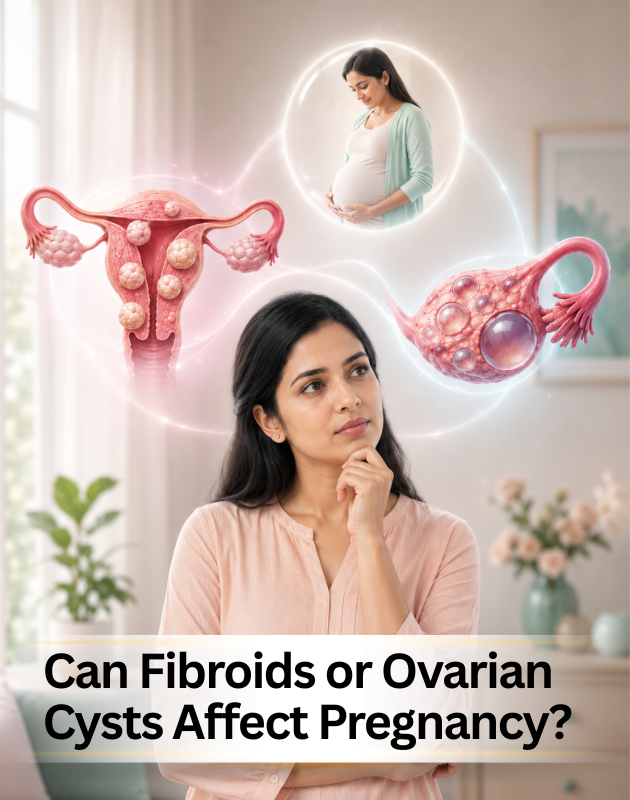
CAN FIBROIDS OR OVARIAN CYSTS AFFECT PREGNANCY?
Most women with fibroids or ovarian cysts can have a healthy pregnancy. However, depending on their size, type, and location, they may sometimes affect fertility or pregnancy. Large fibroids may interfere with conception or increase the risk of pregnancy complications, while most simple ovarian cysts do not affect fertility and often resolve on their own. Certain cysts associated with endometriosis or PCOS, however, may make conception more difficult.
UNDERSTANDING THE DIFFERENCE MATTERS
Fibroids and ovarian cysts may share some symptoms, but they are different conditions with different causes and treatment options. Persistent symptoms should never be ignored or self-diagnosed, as the right treatment depends on an accurate diagnosis.
At SLG Hospitals by Ajeenkya DY Patil Healthcare, our experienced gynecologists provide comprehensive evaluations, advanced diagnostic services, and personalized treatment for a wide range of gynecological conditions, including fibroids and ovarian cysts. Whether you need monitoring or treatment, our team is committed to providing compassionate, evidence-based care. If you’re looking for the best gynecologist in Nizampet, SLG Hospitals offers expert women’s healthcare focused on your comfort, well-being, and long-term health.